

The West Asia Crisis: Roots, Escalation, and the Path Forward
1S. K. Das, 1A Borhan
1Centre for Social Research, Dhaka, Bangladsh
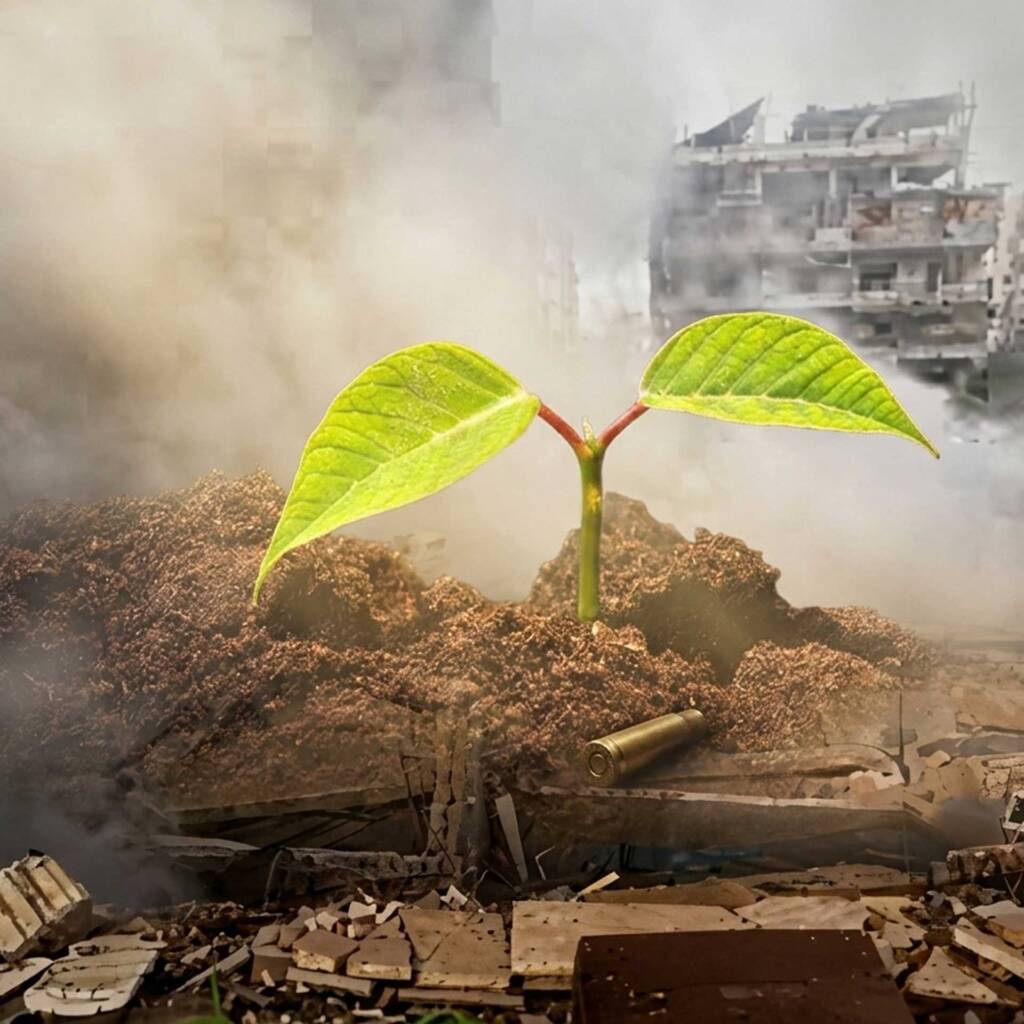
The recent crisis in West Asia (so-called Middle East) is not a series of unfortunate accidents; it is the logical outcome of a global order that prioritizes the accumulation of weapons over the preservation of human life. This current escalation of tensions in the West Asia —particularly following joint Israeli and U.S. military strikes on Iran, and the continuing violence around Gaza—cannot be understood as a series of isolated events. To grasp the full picture, the crisis must be examined within its broader historical context, its political economy, and the framework of global militarization.
At its core, the crisis rests upon three deep structural layers:
- Imperial geopolitics and militarization
- Regional state power and authoritarian governance
- Popular resistance, class politics, and shifting public opinion
A Highly Militarized Region
The Architecture of Militarization: A Region under Watch
West Asia is the most densely militarized geography on Earth. The United States maintains a strategic hegemony through a massive footprint of approximately 40,000 to 50,000 military personnel. This force is distributed across an intricate network of 40 to 60 military installations, ranging from “super-bases” to secretive “lily pad” outposts.
Strategic Distribution of U.S. Bases (2024–2025):
- Qatar: Al Udeid Air Base serves as the forward headquarters for U.S. Central Command (CENTCOM), hosting over 10,000 troops and the region’s most advanced air operations center.
- Bahrain: The Naval Support Activity (NSA) Bahrain hosts the U.S. Navy’s 5th Fleet, ensuring control over the Strait of Hormuz and global energy corridors.
- Kuwait: Historically the most significant hub for ground forces, sites like Camp Arifjan and Ali Al Salem Air Base house over 13,000 personnel.
- United Arab Emirates: Al Dhafra Air Base provides critical surveillance, drone operations, and aerial refueling.
- Jordan, Saudi Arabia, and Oman: These nations host various logistical hubs and missile defense sites (such as Prince Sultan Air Base) that integrate the regional “security umbrella.”
- Iraq and Syria: Approximately 2,500 troops in Iraq and 900 in Syria remain in forward-operating sites, ostensibly for counter-terrorism but functionally serving as geopolitical tripwires.
Western policy discourse often presents this presence as a neutral “security arrangement.” In reality, it reflects a long-term system of military dominance in which armed power shapes and influences political outcomes.
According to 2024 data from the Stockholm International Peace Research Institute (SIPRI), annual military expenditures illustrate the stark imbalance of power:
- The United States spends roughly $877 billion.
- Israel spends around $27 billion—an exceptionally high figure relative to its population.
- Saudi Arabia spends approximately $75 billion.
- Iran spends an estimated $10–15 billion.
The disparity is striking. The regional order has developed around:
- U.S. global military supremacy,
- Israel’s technological and qualitative military advantage,
- Gulf monarchies’ large-scale purchases of advanced weapons systems, and
- Iran’s asymmetric military strategies designed to counter superior conventional forces.
Such vast military expenditures inevitably divert public resources. Funds that could be invested in healthcare, education, climate adaptation, and social welfare instead flow into armaments.
The Victimization of the Invisible: Common People and Migrant Workers
While the global media focuses on the strategic maneuvers of state actors, the true human cost is borne by the “invisible” majority. The aspirations for peace held by common people are systematically undermined by elites who benefit from a state of perpetual high alert.
A particularly tragic dimension is the plight of the migrant labor force. As documented by the International Labour Organization (ILO, 2024), millions of workers from South Asia—specifically from Bangladesh, India, and Nepal—form the economic backbone of the Gulf states. Under the restrictive Kafala system, these workers are stripped of political agency.
Disposable Labor: During military escalations, migrant workers are the most vulnerable. They lack the resources to flee and are often forced to remain in high-risk areas that become targets for strikes.
Economic Precocity: In times of crisis, these workers face immediate wage theft, arbitrary deportation, and the loss of remittances that sustain millions of families back home.
The Crushing of Local Aspirations: For the average citizen in Iran, Iraq, or Gaza, the dream of a stable life is sacrificed for “national security.” As Human Rights Watch (2025) notes, when budgets are dominated by defense, hospitals crumble and basic dignity is ignored.
Inequality, Poverty, and the “Youth Swelling”
The “guns versus butter” trade-off has resulted in a devastating crisis of human development. The World Bank (2024) identifies West Asia (so-called Middle East) as one of the most unequal regions in the world.
The Youth Unemployment Crisis: The region suffers from the highest youth unemployment rate globally, often exceeding 30%. This “youth swelling” consists of millions of educated young people with no economic future, a primary driver of social unrest.
Poverty and Economic Warfare: In nations like Iran, the United Nations Special Rapporteur on Unilateral Coercive Measures has detailed how sanctions primarily devastate the working and middle classes. Skyrocketing inflation and the lack of life-saving medicines dismantle the lives of the poor while failing to weaken the ruling elite.
Structural Inequality in the Israel–Palestine Conflict
The Israel–Palestine conflict is often portrayed as a struggle between two equal sides. This is a misleading framing. No serious analysis supports the idea of parity between the two parties.
Reports from the United Nations, Human Rights Watch, and Amnesty International document prolonged occupation, settlement expansion, and the blockade of Gaza. Some analyses draw comparisons with systems of institutionalized discrimination, though the terminology itself remains politically contested. What is clear, however, is the presence of structural inequality.
This inequality includes Military occupation, Expansion of settlements, Control over land, water, and borders, Restrictions on movement and trade.
Recent wars in Gaza have demonstrated clear asymmetry in casualties and infrastructure destruction, with Palestinian civilians suffering disproportionate losses. This is not a conflict between equal powers. It is shaped by dominance and structural imbalance.
Military superiority combined with prolonged blockade has produced a severe humanitarian crisis. The issue is not merely one of security; it is rooted in a long history of control and dispossession.
Sanctions, Regional Power, and Political Economy
Sanctions and regional power politics are embedded in a broader political economy of dominance. Iran plays a significant role in regional politics and pursues a strategic military doctrine. It avoids direct conventional war with the United States, instead relying on allied groups such as Hezbollah and Iraqi militias, as well as missile deterrence and asymmetric naval strategies.
Progressive thinkers worldwide tend to offer a dual critique regarding Iran:
First, they oppose U.S. economic sanctions. These sanctions have restricted Iran’s oil exports and financially isolated the country. The resulting shortages of medicine and essential goods have severely affected ordinary Iranians, producing humanitarian hardship.
Second, they also criticize Iran’s internal authoritarianism and suppression of dissent.
In practice, sanctions often strengthen hardline factions while harming working people and the middle class.
The Military–Industrial Complex
The behavior of the United States as a global power is shaped in part by what President Dwight D. Eisenhower famously warned against: the “military–industrial complex.” The concept remains relevant today.
Major U.S. defense corporations—such as Lockheed Martin, Raytheon Technologies, and Northrop Grumman—play a central role in global arms production. According to U.S. arms transfer reports, Israel receives approximately $3.8 billion annually in U.S. military assistance, while Gulf states purchase billions of dollars in advanced weaponry.
Prolonged instability sustains demand for arms. Defense companies profit from conflict. Public records on lobbying further reveal close ties between the arms sector and political institutions. Foreign policy, therefore, is not shaped solely by strategic considerations; corporate interests are also deeply embedded.
Shifting Public Opinion in the United States
Public opinion in the United States has historically played a decisive role in foreign policy debates, as seen during the Vietnam War. Today, attitudes are shifting again.
Surveys by Gallup and the Pew Research Center indicate growing sympathy for Palestinians among Americans aged 18–34. Among Democratic voters, there is significant internal division, with progressive segments increasingly critical of Israeli government policies. Republican voters, by contrast, remain largely supportive of Israel.
Three notable trends stand out:
- Generational change,
- War fatigue following Iraq and Afghanistan,
- Campus activism reminiscent of anti–Vietnam War movements.
A growing number of Americans—including intellectuals and even politicians such as Jeffrey Sachs and others—are questioning critically the unconditional military assistance. They link foreign military spending to domestic inequality and underinvestment at home.
Who Benefits and Who Suffers?
Every region contains social classes and economic interests. In the Middle East, the beneficiaries of prolonged militarization include Security elites, Arms industries, Regional oligarchies, Energy and financial networks.
Those who suffer include Palestinian working people under occupation, Lower-income Israelis living in insecurity, Iranian workers and middle classes burdened by sanctions, Migrant laborers in Gulf states.
Large military budgets almost always crowd out welfare policies, democratic reforms, and climate adaptation. This principle applies globally.
From a structural and dialectical materialist perspective, the core contradictions of the region can be described as:
- Military dominance versus popular sovereignty,
- Arms-driven capital accumulation versus social welfare,
- The rhetoric of national security versus the reality of human security.
A Global Strategy, Not a Regional Episode
The Middle East functions as a geopolitical laboratory. It is shaped by the Strategic rivalry, Fossil-fuel-based capitalism, Proxy wars and Militarized borders.
At the same time, it is a space of popular mobilization, labor struggles, youth awakening, and digital global solidarity.
U.S. policy toward the Middle East and its confrontation with Iran cannot be viewed in isolation. It forms part of a broader global strategy, including efforts to shape energy flows that affect China and the Asia-Pacific region. U.S. actions in Venezuela, pressure on Cuba, and regime-change strategies elsewhere are interconnected elements of a wider geopolitical framework.
Toward Peace and Structural Change
The analysis above leads to a clear conclusion: democratic, progressive, and peace-seeking people worldwide may find common ground in a principled stance—not war, but peace. This implies global and institutional demands such as: Immediate ceasefire and civilian protection, Opposition to blockade and collective punishment, Halting settlement expansion, Recognition of Palestinian self-determination, Reduction of regional nuclear tensions, Shifting military expenditure toward social development, Ending unilateral sanctions that harm civilian populations. The Middle East crisis is not merely a regional conflict. It is a crossroads of the U.S. global power, Israeli security doctrine, Iranian resistance strategy, Gulf oil-based monarchical capitalism, The historical dispossession of Palestinians and the accumulation logic of global military-industrial capital.
A progressive perspective does not frame this as a “clash of civilizations,” nor does it accept blind securitization. Instead, it emphasizes International law, Social justice, Demilitarization, Equitable distribution of resources, Democratic sovereignty, Ultimately, the social redistribution of wealth. Lasting peace cannot emerge from military supremacy alone. It requires structural transformation—political, economic, and social. It demands that human dignity be placed above strategic domination. In conclusion, the path to peace is not found through more sophisticated weapons, but through the reclamation of human dignity. Lasting stability requires the redistribution of wealth, the protection of the weak, and the unwavering pursuit of justice over strategic domination.



1 Comment
Towfiq Nawaz
Excellent article