BBangladesh has achieved remarkable agricultural growth since its independence, ensuring near self-sufficiency in staple foods despite significant challenges like declining arable land. This success, largely driven by the Green Revolution, has diversified diets and uplifted rural livelihoods. However, this progress comes with a heavy cost: severe environmental degradation, including soil and water pollution, biodiversity loss, increasing greenhouse gas emissions, and a growing threat from antimicrobial resistance. Coupled with the acute impacts of climate change—projected yield reductions and economic losses—these challenges underscore an urgent need for a transformative shift in the nation’s agri-food system.
This report conducts a comparative analysis of Bangladesh’s key agricultural policies—the National Agriculture Policy 2018 (NAP 2018), National Agriculture Extension Policy 2020 (NAEP 2020), and National Organic Agriculture Policy 2016 (NOAP 2016). While these policies acknowledge sustainability and climate resilience, a closer examination reveals fundamental contradictions and implementation gaps. For instance, NAP 2018 simultaneously promotes organic practices and chemical inputs, and prioritizes commercialization and mechanization, which can undermine ecological principles and farmer livelihoods. NOAP 2016, though aligned with agroecology, operates in a silo, lacking full integration into mainstream agricultural development. NAEP 2020 aims for farmer-centric approaches but can still default to a technology transfer model without explicit directives for agroecological transformation.
The report identifies five core contradictions hindering Bangladesh’s path to a sustainable and resilient food system:
- Environmental Sustainability: Persistent reliance on synthetic inputs contradicts efforts to minimize the ecological footprint, contributing to pollution and resource depletion.
- Economic Viability & Equity: Emphasis on commercialization and mechanization can disadvantage smallholders and displace rural labor.
- Social Well-being & Cultural Appropriateness: Continued use of pesticides poses health risks, and a focus on export crops can erode local dietary diversity.
- Resilience: Over-reliance on intensive, monoculture varieties reduces genetic diversity, making the food system vulnerable to shocks.
- Governance & Participation: Predominantly top-down policy frameworks limit genuine farmer participation and co-creation of knowledge.
To address these challenges, a fundamental transformation is imperative, shifting from:
- Input-Dependence to Ecological Intensification: Leveraging natural processes to build soil health and minimize external inputs.
- Monoculture to Diversified Agri-food Landscapes: Promoting mixed cropping, agroforestry, and varied local varieties for enhanced resilience and nutrition.
- Top-Down Technology Transfer to Co-Creation of Knowledge: Empowering farmers, scientists, and communities to collaboratively develop context-specific solutions.
- Centralized to Decentralized, Farmer-Friendly Markets: Strengthening direct linkages, local food hubs, and farmer organizations to ensure fair prices and reduced losses.
- Generic Solutions to Context-Specific Adaptations: Tailoring policies and practices to Bangladesh’s diverse agro-ecological zones.
- Reactive to Proactive & Anticipatory Governance: Implementing policies that prevent crises and build long-term resilience through continuous learning and adaptation.
Key Recommendations for Integrated Implementation and Transformation:
- Establish a National Agroecology Action Plan (NAAP): A comprehensive, time-bound plan with dedicated budgets and high-level inter-ministerial oversight, setting clear targets for reducing synthetic inputs and enhancing agro-biodiversity.
- Harmonize Policy Directives: Revise NAP 2018 and NAEP 2020 to explicitly prioritize agroecology, including phased reduction of synthetic inputs, integration of NOAP 2016, and incentives for ecological practices.
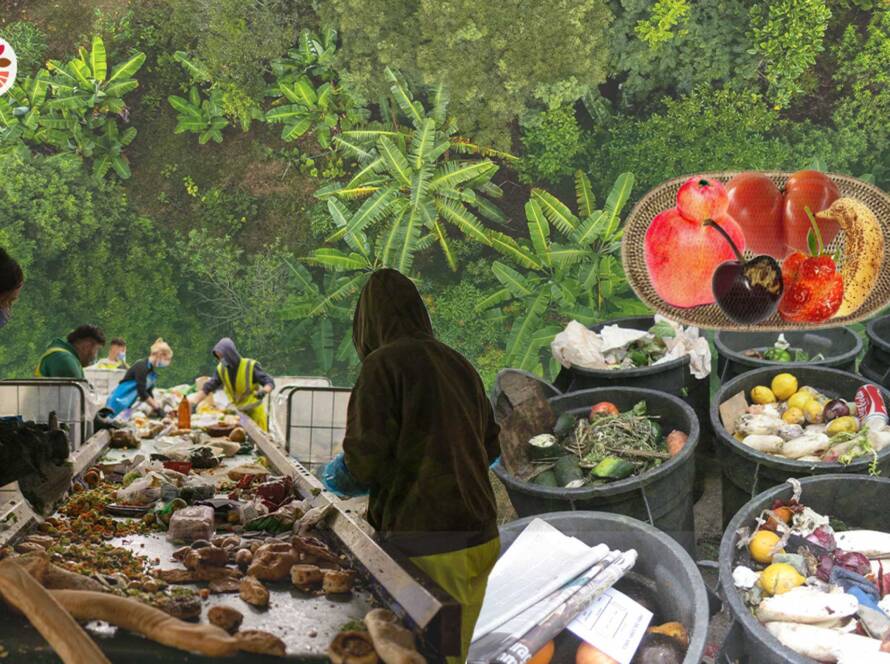
- Comprehensive National Food Loss and Waste (FLW) Strategy: Formulate a robust strategy with measurable targets for reducing FLW, investing in decentralized infrastructure, promoting value addition, launching public awareness campaigns, and establishing a national data monitoring system.
- Strengthen and Localize Food Systems: Prioritize local markets, invest in local food hubs, incentivize diverse local production, and implement public procurement policies that favor local, agroecologically produced food.
- Reorient Research and Extension: Align agricultural research with agroecological innovations, train extension workers in agroecology and FLW reduction, and facilitate farmer-to-farmer learning.
- Empower and Strengthen Farmers’ Organizations (FOs): Establish a dedicated FPO wing in the Ministry of Agriculture, provide enhanced legal and financial support, ensure their meaningful representation in decision-making, and bridge the digital divide for market information and precision agroecology.
- Foster Multi-Stakeholder Collaboration and Responsible Governance: Establish a National Food System Initiative for holistic oversight, ensure transparency and accountability, and embed a human rights-based approach to food in all policies.
Navigating a Resilient and Sustainable Path: Agroecology and Food System Transformation in Bangladesh
Low-cost technologies and Artificial Intelligence (AI) offer immense potential to support this transition, enabling precision agroecology, AI-powered advisory services, efficient resource management, and empowered decision-making for small and marginal farmers, provided they are ethically deployed and accessible.
Bangladesh’s journey demands courageous, integrated, and transformative action. By prioritizing agroecology, drastically reducing food loss and waste, and strengthening local food systems, the nation can build a food system that is environmentally regenerative, socially just, economically viable, and profoundly resilient to escalating climate and socio-economic challenges. The transformation to agroecology is not merely an alternative pathway but an imperative for Bangladesh’s long-term food security, environmental sustainability, and social justice. This involves embracing ecological intensification over input dependency, diversified landscapes over monocultures, and farmer empowerment over top-down technology transfer, ensuring a sustainable, equitable, and resilient future.